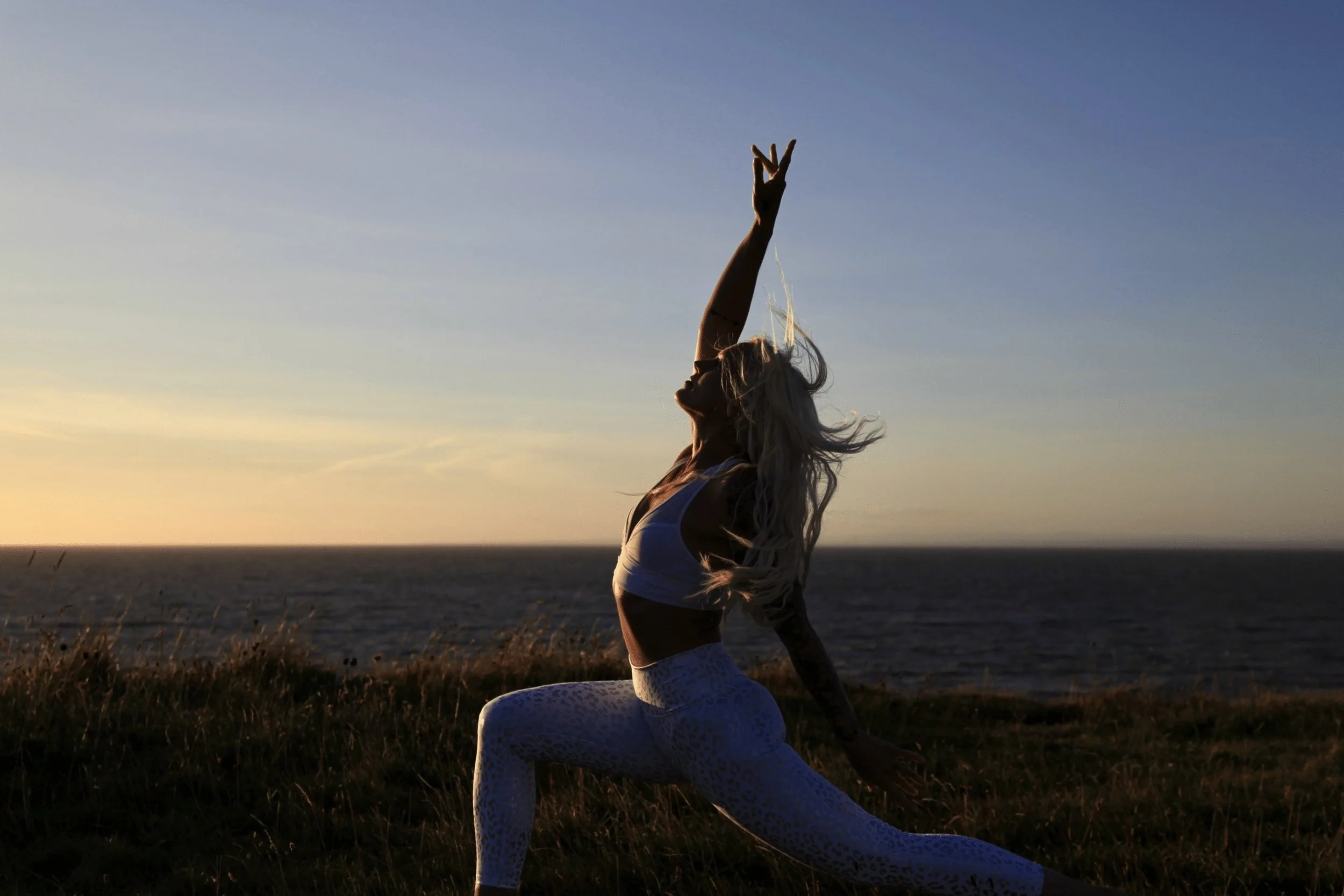
Yoga & TANTRA
Let’s start with what Yoga is not.
It’s not a workout! It’s not about toning up, getting flexible, or perfecting a handstand and, despite what Instagram might tell us, it’s not defined by postures.
Yoga is an ancient, beautiful Indian philosophical system designed to awaken us to our true nature. It offers many doorways: meditation (dhyana), breath control (pranayama), awareness cultivation, and yes - asana (physical movement). But postures are only one part of a much wider, deeper path.
With roots in the Tantric traditions that predate classical yoga texts, Yoga is ultimately a practice of awakening - to a life more connected, nuanced, embodied, and meaningful than we may have ever believed possible.
And here’s the truth: You don’t need to be skinny, strong, or flexible to practice. You don’t even need a mat. You only need you - a willingness to be curious and meet yourself in the moment.
So, what about Tantra?
Despite what Google may tell you, Tantra is not sex. What you’ve likely encountered is Neo-Tantra, a modern, Western-influenced interpretation often focused on intimacy and pleasure.
The Tantra I practice and teach is non-dual Shaiva Shakta Tantra - a spiritual path rooted in liberation, embodiment, and self-remembrance.
Tantra teaches us that nothing in life is to be rejected. Every part of our experience becomes a gateway into knowing ourselves more deeply. Through subtle body practices - mantra, meditation, breathwork, visualisation, and energy cultivation - we learn how to live from the inside out.
This is the heart of Tantra Yoga: Profound intimacy with life, empowerment through presence, and freedom through remembering who we truly are.
What is Yoga Nidra?
Yoga Nidra or "yogic sleep," is a guided meditative practice that invites the body into deep rest while the mind remains aware and receptive. It's not about falling asleep but rather entering a liminal state between waking and dreaming where healing, integration, and transformation can occur.
Yoga Nidra’s lineage is deeply rooted in non-dual Tantric teachings which view consciousness as inherently divine. In these traditions:
Deep rest is not escapism but a gateway to the Self.
The aim is not transcendence but immanence - resting into reality, not away from it.
States of consciousness (waking, dreaming, deep sleep) are all seen as valid portals to experiencing the Divine Ground of Being.
As we take a journey around the body, we place our consciousness at different points which, in Tantra, is called nyasa – meaning to place in a special way.
Benefits
1. Deep Nervous System Reset
Activates the parasympathetic nervous system, helping to reduce cortisol, soothe anxiety, and support emotional regulation - especially crucial in perimenopause and trauma healing.
2. Pathway to Inner Alchemy
By traveling through the koshas (body, breath, mind, wisdom, bliss), practitioners dissolve old patterning and align with inner essence.
3. Access to the Subtle Body & Shadow Realms
Yoga Nidra opens a bridge to the unconscious and superconscious. Intentions (sankalpa) planted here have fertile ground for manifestation and healing.
4. Non-doing as Sacred Practice
In a world addicted to striving, Yoga Nidra offers radical permission to be. It is a deeply feminine practice - a surrender into spaciousness, into the dark womb of creation.
how i teach
I hold space from the heart, with passion, presence, and reverence. My classes are intuitive, trauma-informed, and rooted in you - your body, your needs, your way. I offer practices that encourage freedom, exploration, and curiosity, rather than rigid structures or alignment rules.
As Bernie Clark says: “We don’t use the body to get into a pose. We use the pose to get into the body.”That’s exactly how I teach. You are the authority of your experience and your body is your greatest guide. Each practice is an invitation to remember who you are, how you feel, and what it means to live in alignment with your own rhythm.